Remember Now
From everyday stories during COVID-19 to patterns, systems and possibilities for more socially connected communities.
Design Research
Systems Thinking
Role
Design Researcher
Timeline
2020–2021
team
D-Lab Research Team
platform
Remote Ethnography, Diary studies, Interviews, Research Synthesis, System Mapping, Scenario

The challenge
To understand how everyday life was changing during COVID-19 and identify opportunities for more socially connected and resilient futures. Remember Now explored people's lived experiences of the pandemic, looking at changes to health, happiness and prosperity.
The research focused on questions such as:
How were people's behaviours and relationships changing?
What was helping or disrupting social connection?
What could these experiences reveal about opportunities for life after COVID-19?
The process
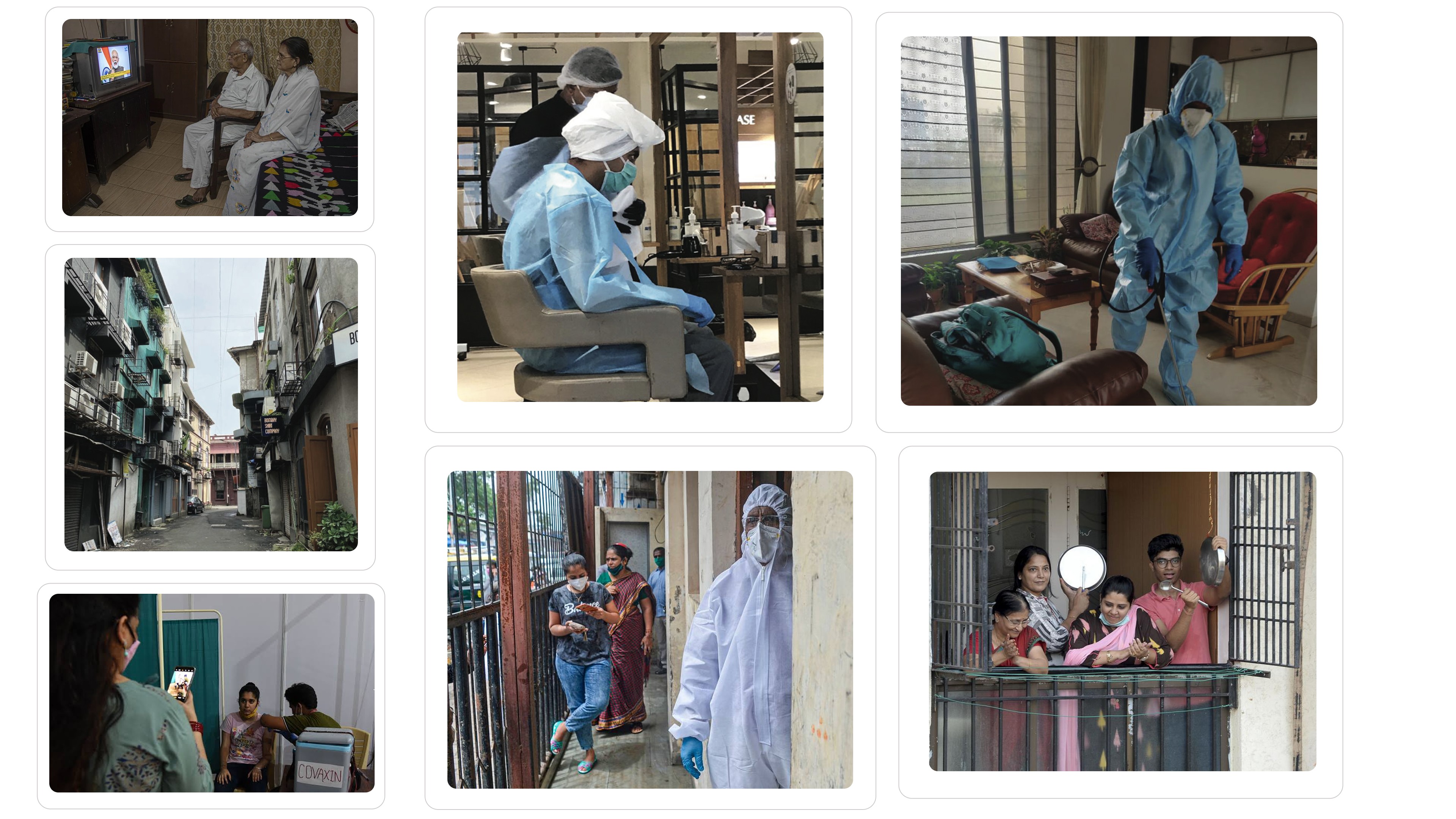
The research began with remote ethnography to understand how people's everyday lives were changing during COVID-19. Participants were asked to document their experiences through photographs and videos, capturing moments related to their health, happiness, relationships and everyday routines.
Research
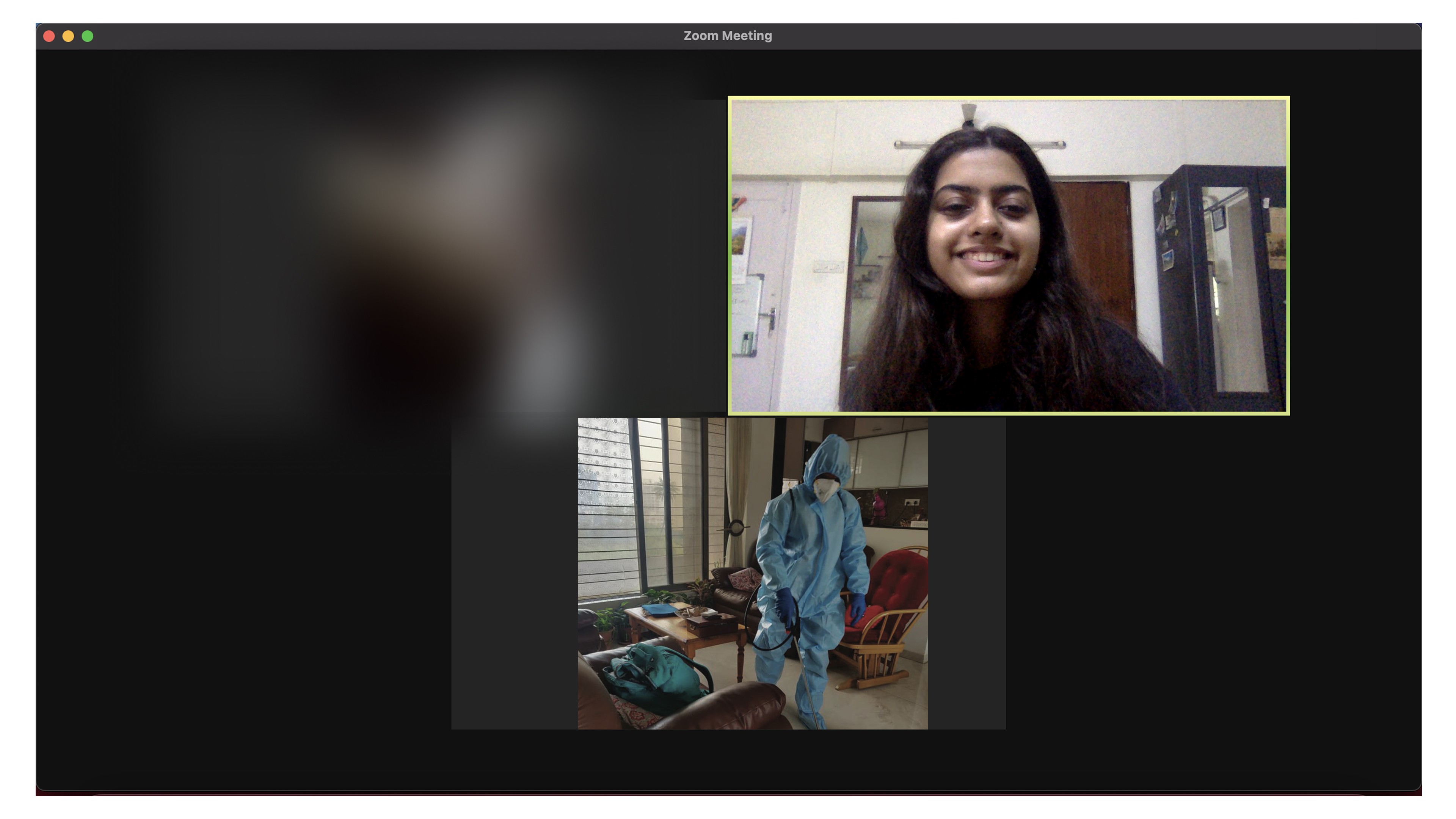
I then used these participant-generated artefacts as research probes during interviews and focus groups. Rather than asking participants to recall their experiences in the abstract, I asked them to talk through what they had captured: what was happening, why they documented it, how they felt and what had changed for them during the pandemic.
I used two primary research methods:
1. Open interviews
Used participants' images and videos as prompts to explore individual experiences, behaviours and changes in everyday life.
2. Focus groups
Explored shared and contrasting experiences across participants, helping surface recurring behaviours, relationships and concerns.
Analysing Research
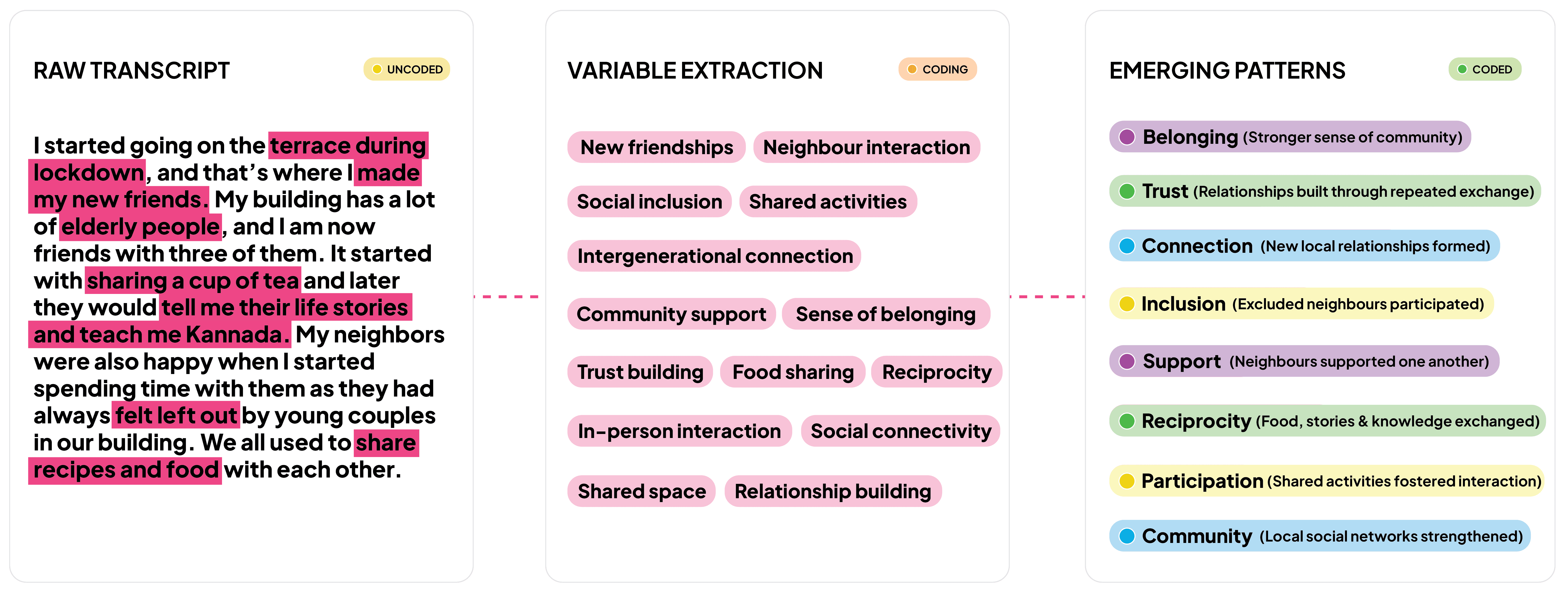
I collated transcripts and participant stories in Excel, then coded the data to identify variables, recurring themes and relationships. These informed the system mapping and opportunity framing that followed.
Key findings
Health concerns changed social behaviour. Greater perceived risk led to fewer in-person interactions.
Social connection influenced health behaviours. People took precautions not only for themselves, but to protect their wider social networks.
Technology enabled connection, but had limits. Digital tools helped people stay connected, while prolonged virtual interaction could also contribute to isolation.
Shared spaces created new local connections. Terraces and neighbourhood spaces enabled relationships to form closer to home.
More time at home created new shared activities. Cooking, gardening and hobbies became opportunities for interaction and bonding.
Everyday acts became forms of care. Sharing food, knowledge and activities helped people support family and neighbours.
Social connectivity was interconnected. Health, technology, isolation, social support and everyday activities influenced one another rather than operating independently.
Mapping the system
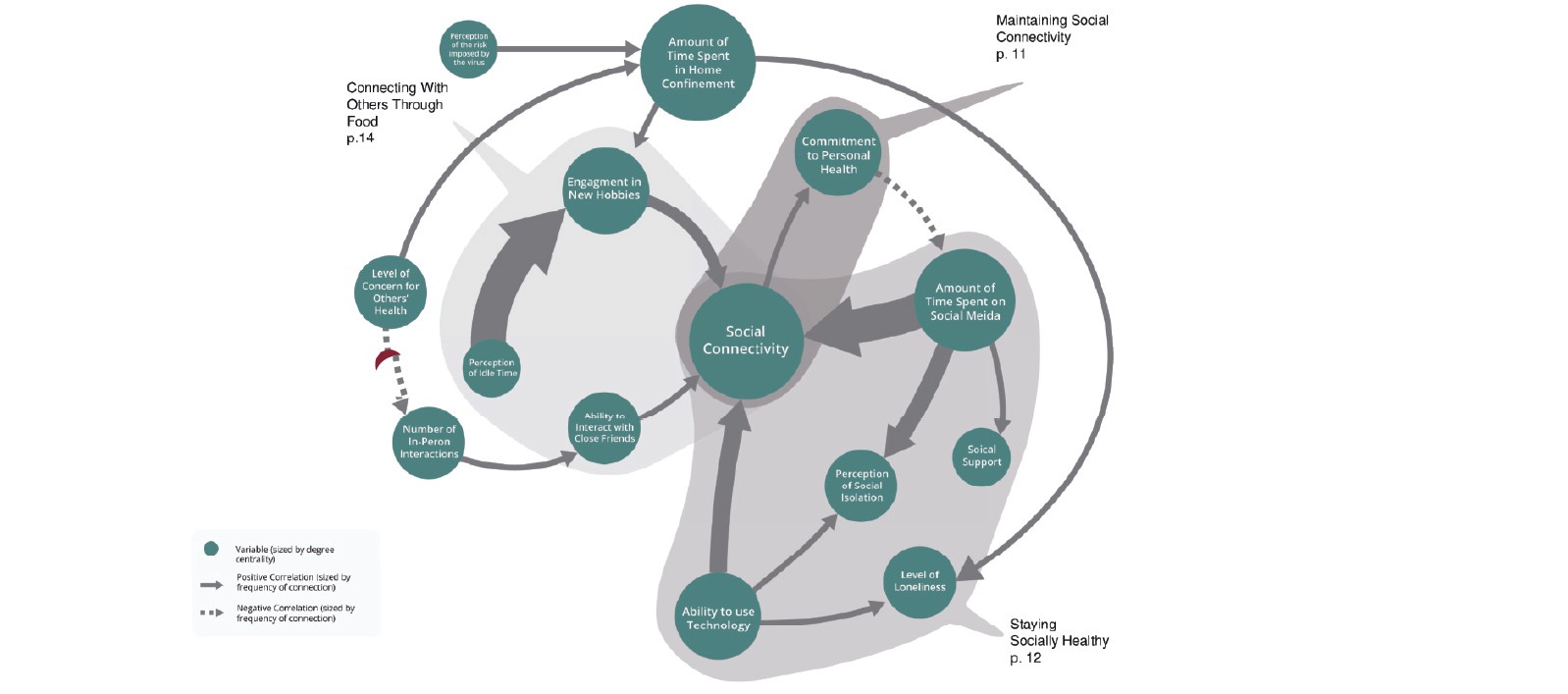
I mapped these findings as relationships between variables to understand how changes in one part of everyday life influenced another.
From stories to system patterns
Based on the research, I traced participant stories through the system map to understand how individual experiences connected to wider behavioural patterns.
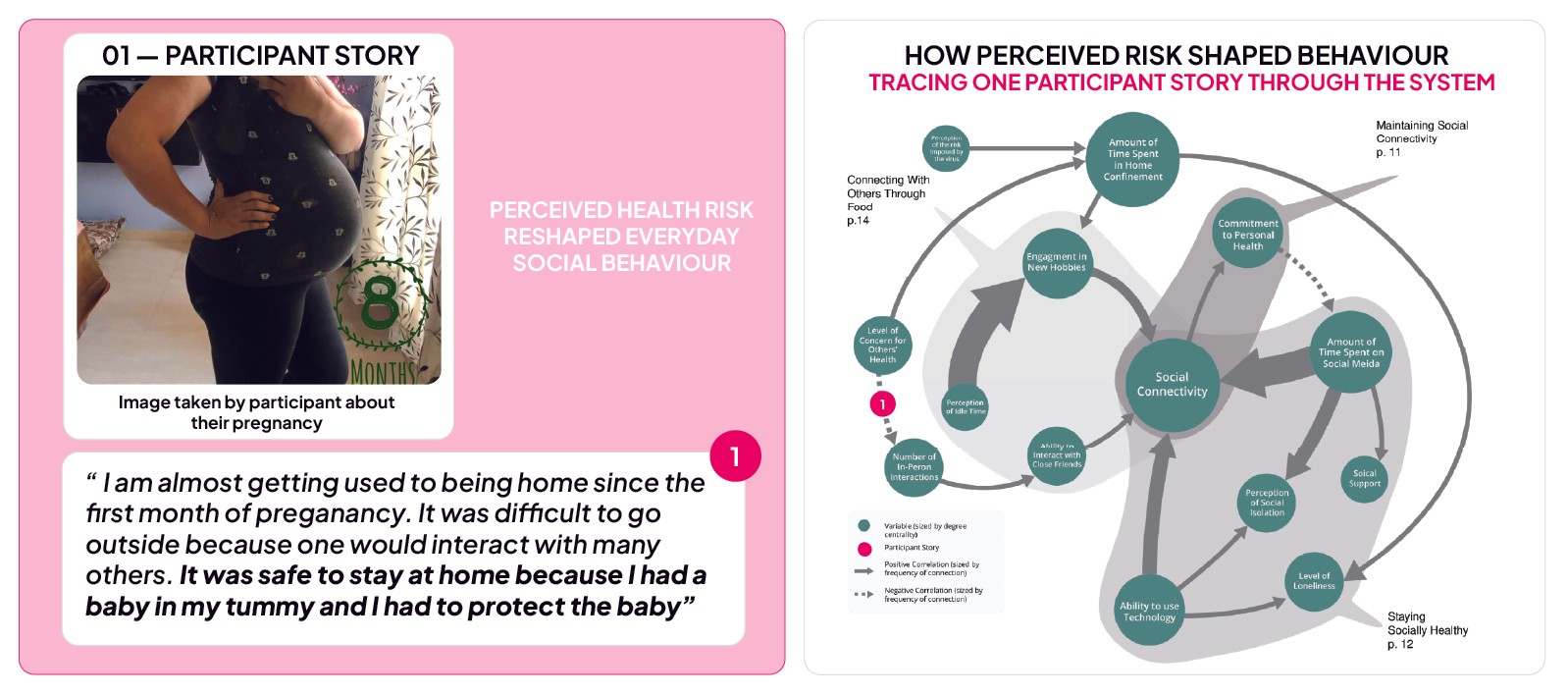
🎯 Perceived health risk shaped social behaviour.
Greater concern for others' health was associated with fewer in-person interactions.
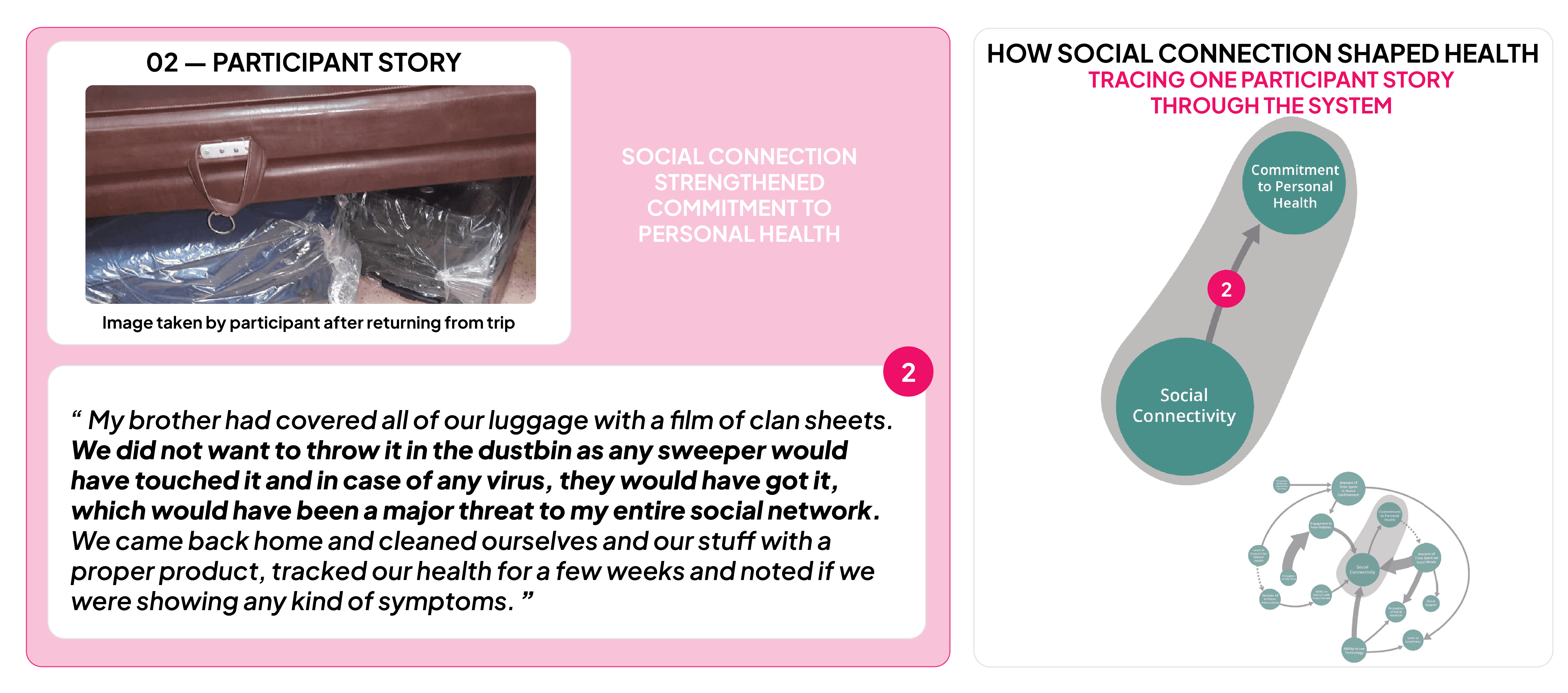
🎯 Social connection influenced personal health.
Stronger social connectivity was associated with greater commitment to personal health.
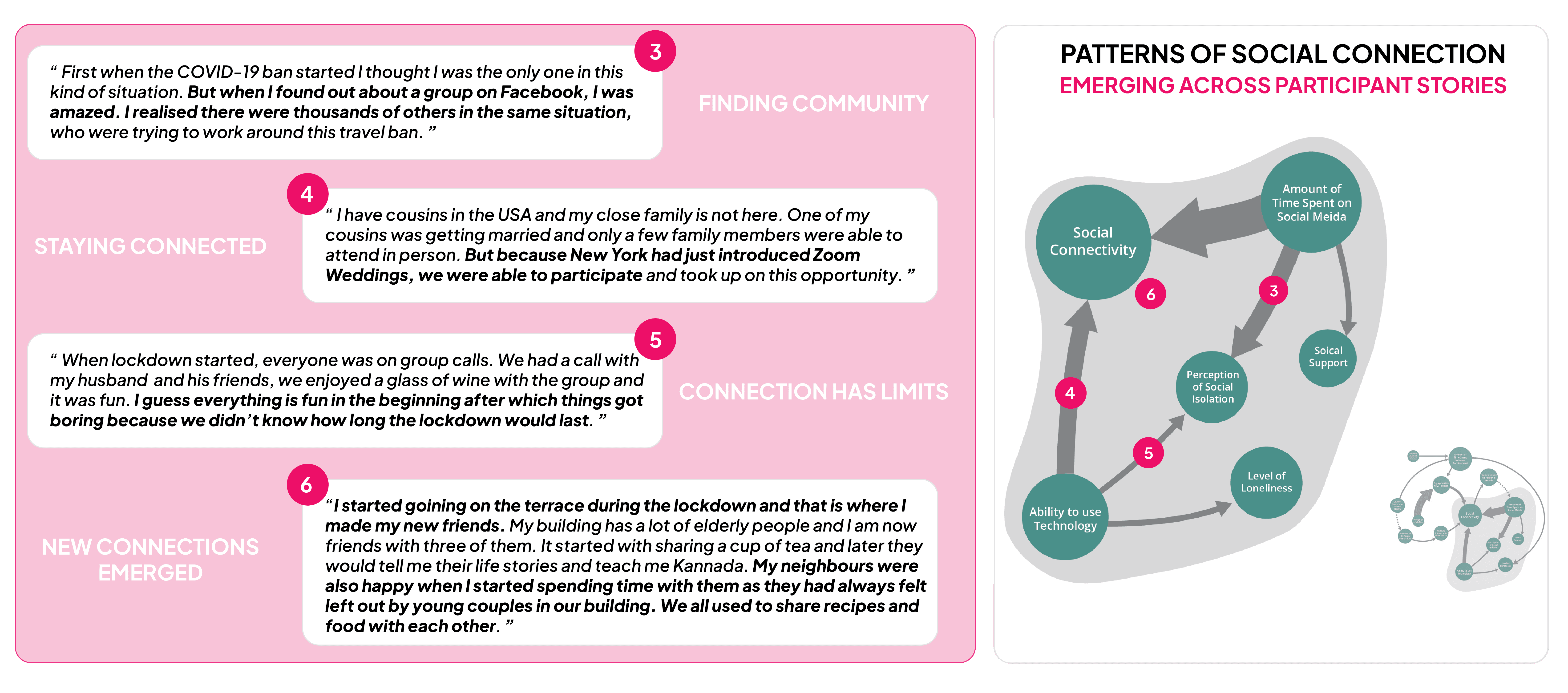
🎯 Technology changed how people stayed connected.
Social media and video calls enabled connection, while isolation, loneliness and social support shaped how meaningful that connection felt.
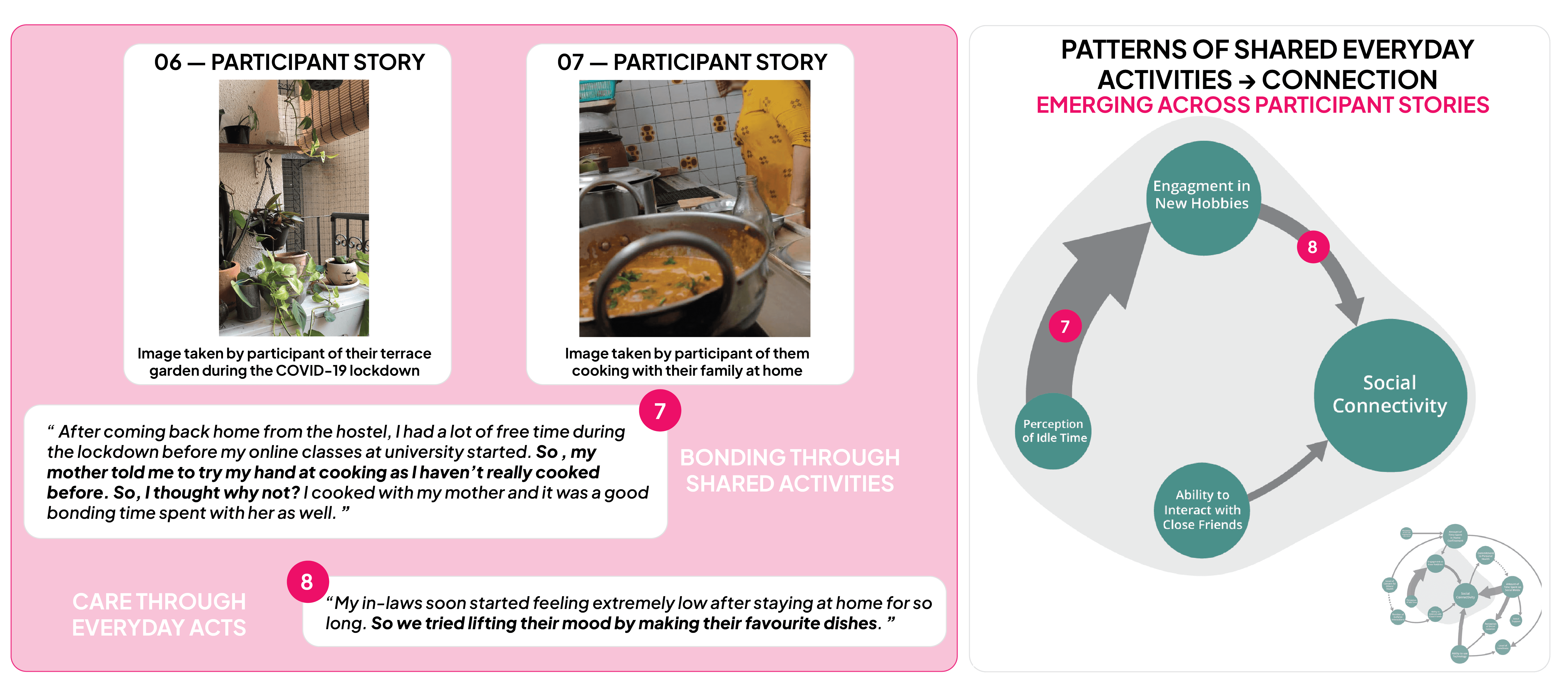
🎯 Everyday activities became opportunities to connect.
More idle time encouraged new hobbies, while cooking, gardening and shared activities created opportunities for social connection and care.
Together, the stories revealed multiple pathways to social connection. This led us to explore shared hobbies as an opportunity:
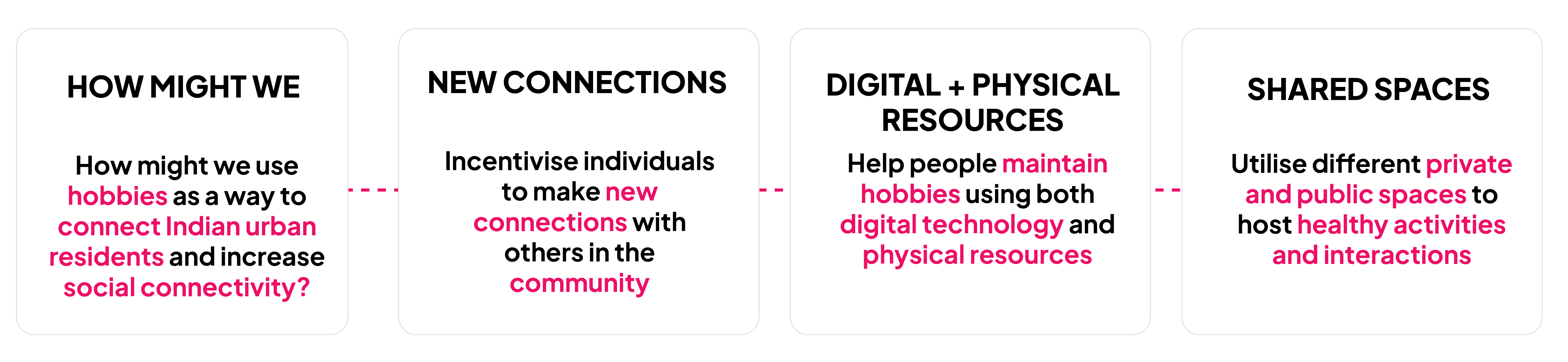
How might we use hobbies to connect Indian urban residents and increase social connectivity?
Ideation & concept
I brainstormed interventions around hobbies, shared spaces and community interaction. ROOT emerged as the concept to develop.
ROOT
A community gardening system using growing, sharing and learning to strengthen social connection.
Mapping the system
I mapped:
Stakeholders — residents, government, experts and local businesses.
System anatomy — people, services, spaces, objects and activities.
This turned ROOT from a concept into an interconnected system.

Testing ROOT through scenarios
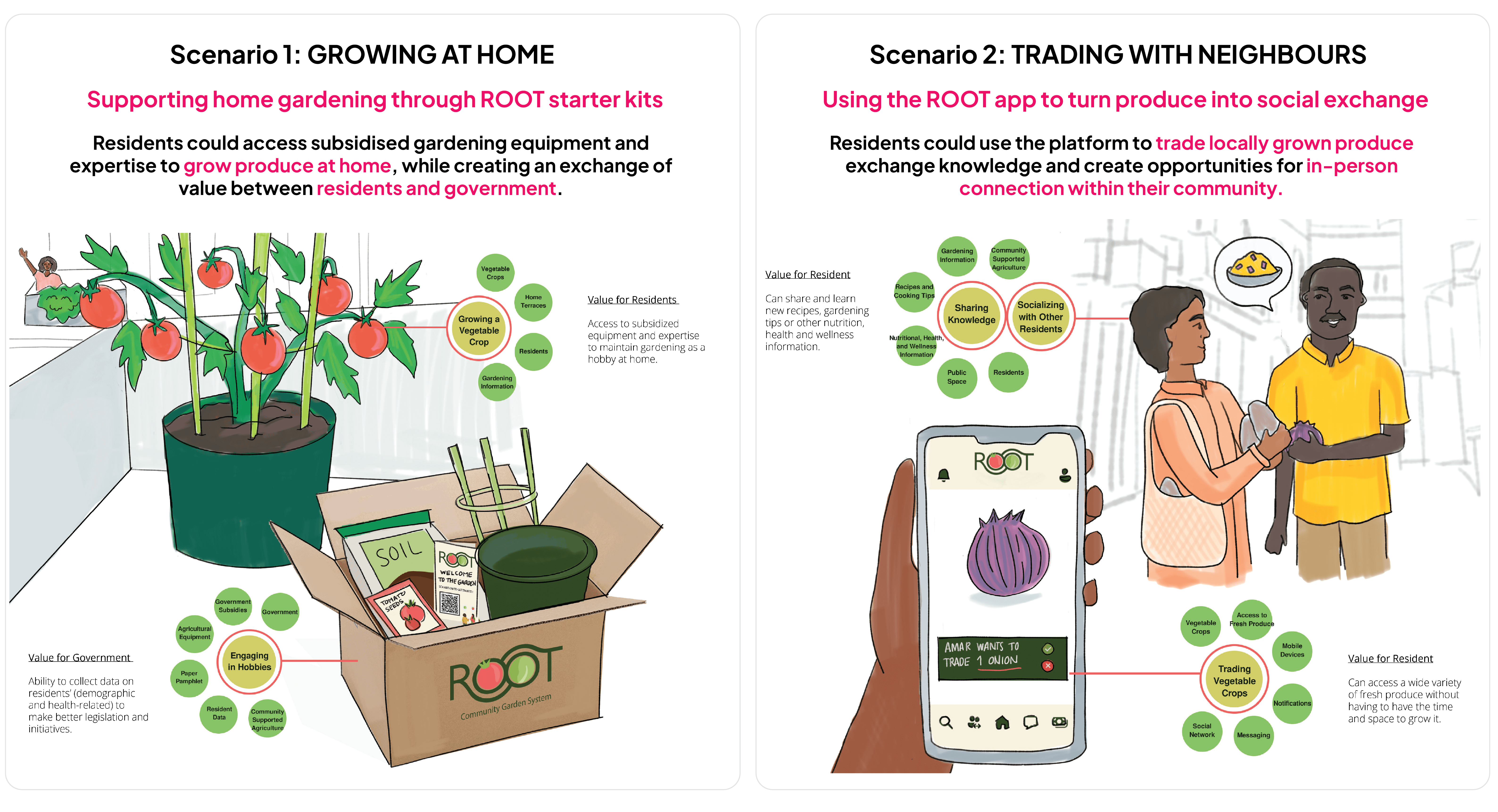
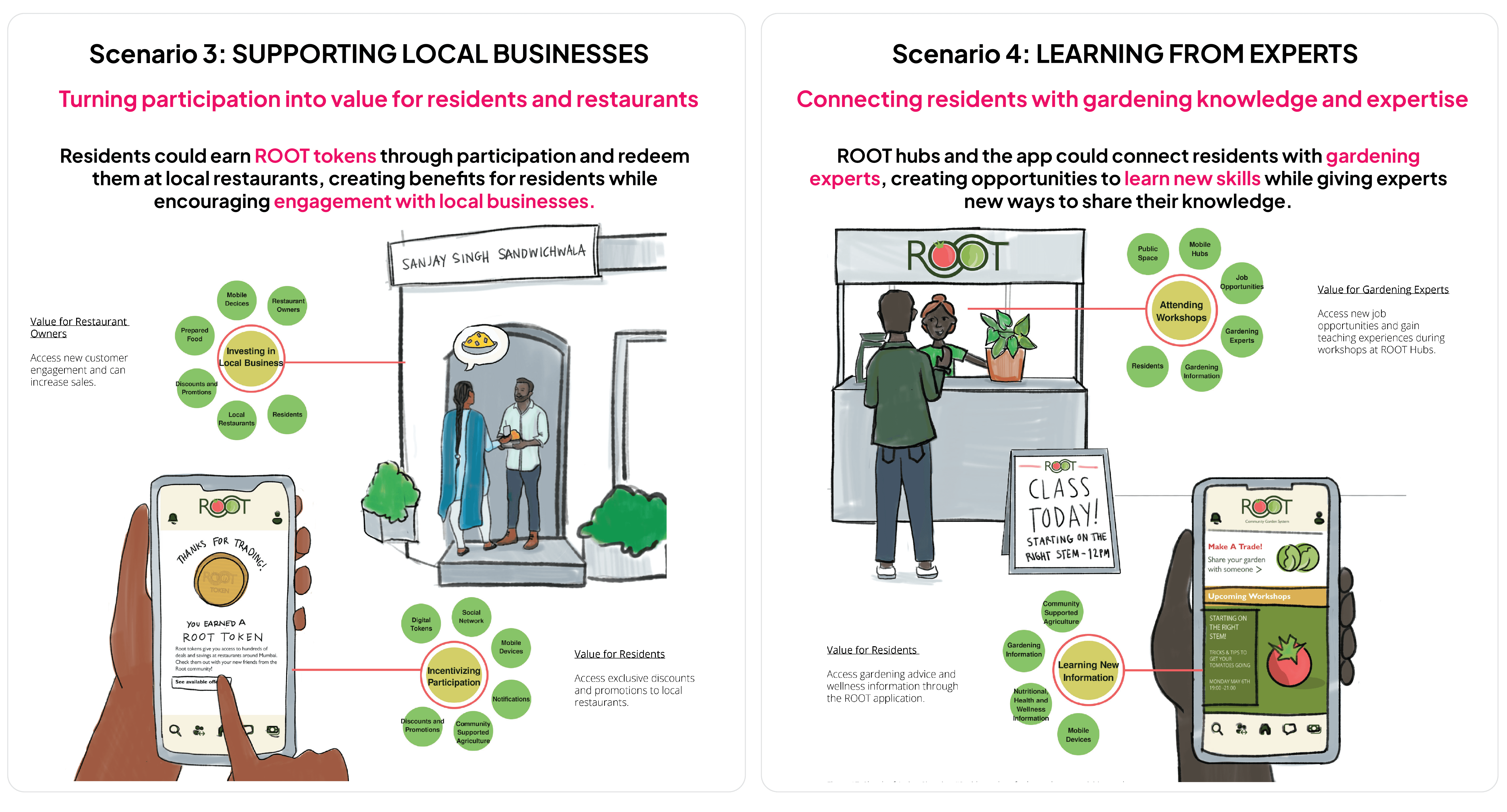
I developed four scenarios to explore how ROOT could work in everyday life and create value across the community.
Growing at home — Residents access gardening kits to grow food at home.
Trading with neighbours — Residents exchange produce and knowledge, creating local connections.
Supporting local businesses — Participation earns ROOT tokens redeemable with local businesses.
Learning from experts — Residents access gardening knowledge and workshops through ROOT.
The scenarios helped me test how people, services, spaces and value exchanges could work together to strengthen social connectivity.
Output
The ROOT concept brought the research, system mapping and scenarios together into a system-level proposal for strengthening social connectivity.
The concept was showcased to academics and public health experts as part of the wider Remember Nowresearch.
ROOT demonstrated how insights from lived experiences could translate into a future community systemconnecting residents, experts, businesses and government.
The scenarios made the concept tangible by showing how it could work across everyday activities and interactions.
Reflection & Learnings
ROOT remained a conceptual proposal, so the next step would have been to test scenarios with residents and stakeholders, validate assumptions and define a feasible first iteration.
The project taught me to move from qualitative research to systemic design, connecting individual stories to system patterns, stakeholders and service scenarios.
What I took forward
Research before solution — Start with lived experience.
Move between scales — Connect stories to systems.
Make systems tangible — Map, prototype and test complexity.
Design relationships — Think beyond individual touchpoints.